

Noto è il nome dell’architetto – Giovanni de’ Pessina – che nell’ultimo quarto del Quattrocento progettò la sala capitolare, realizzata in corrispondenza dell’ala occidentale del chiostro. Il portale di accesso all’ambiente, valorizzato da fini decorazioni in terracotta che testimoniano l’elevata abilità delle maestranze che lavoravano per il monastero, mostra quale importanza fosse attribuita alla sala.
Sebbene non siano state rinvenute notizie specifiche in relazione a Santa Maria Teodote, è lecito ritenere che qui, come negli altri monasteri di tradizione benedettina, avessero luogo incontri quotidiani di preghiera e di ammonimento, venissero discusse questioni amministrative e pratiche e venisse letto un capitolo della regola: da ciò deriva il nome della sala.
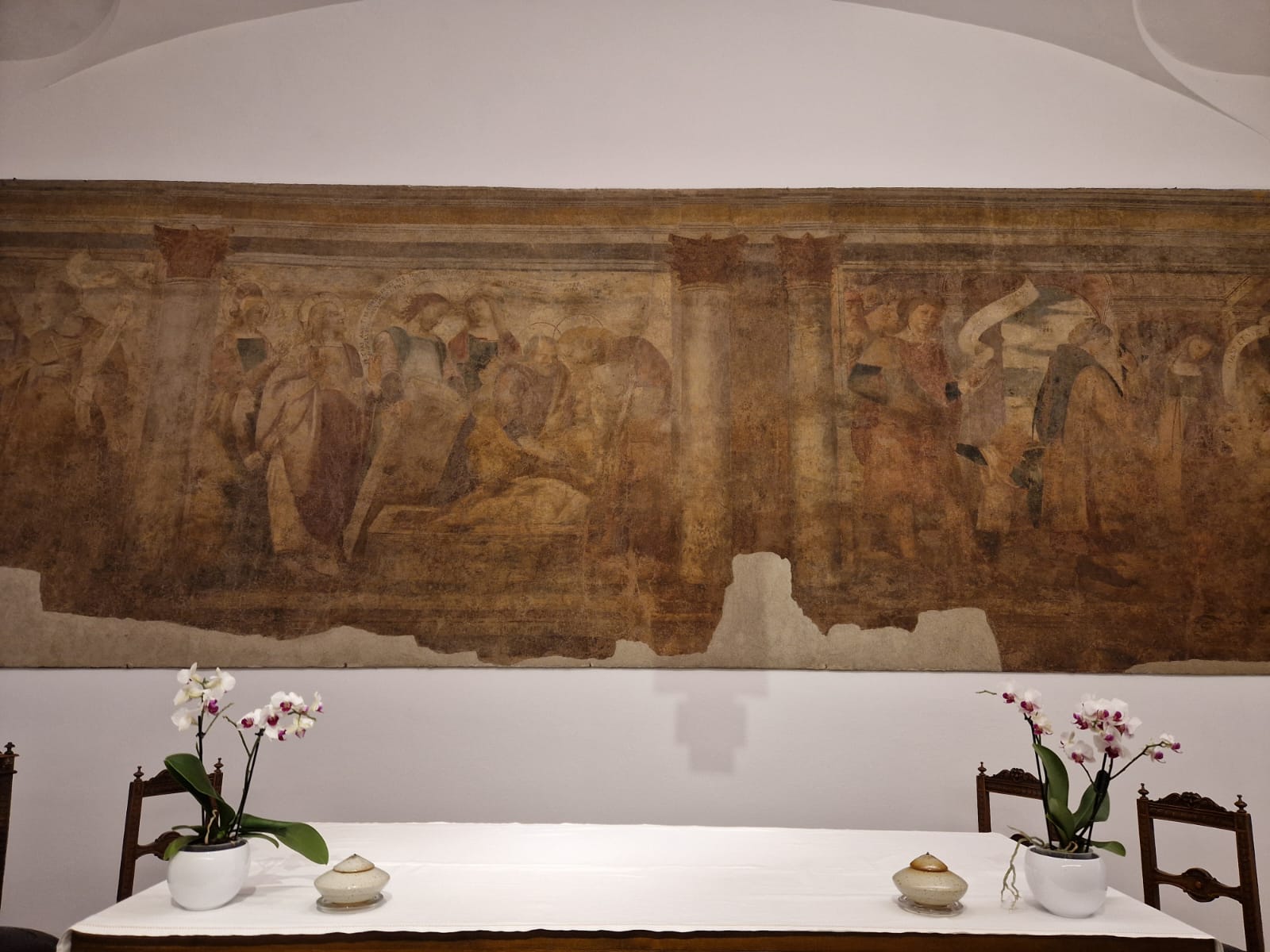
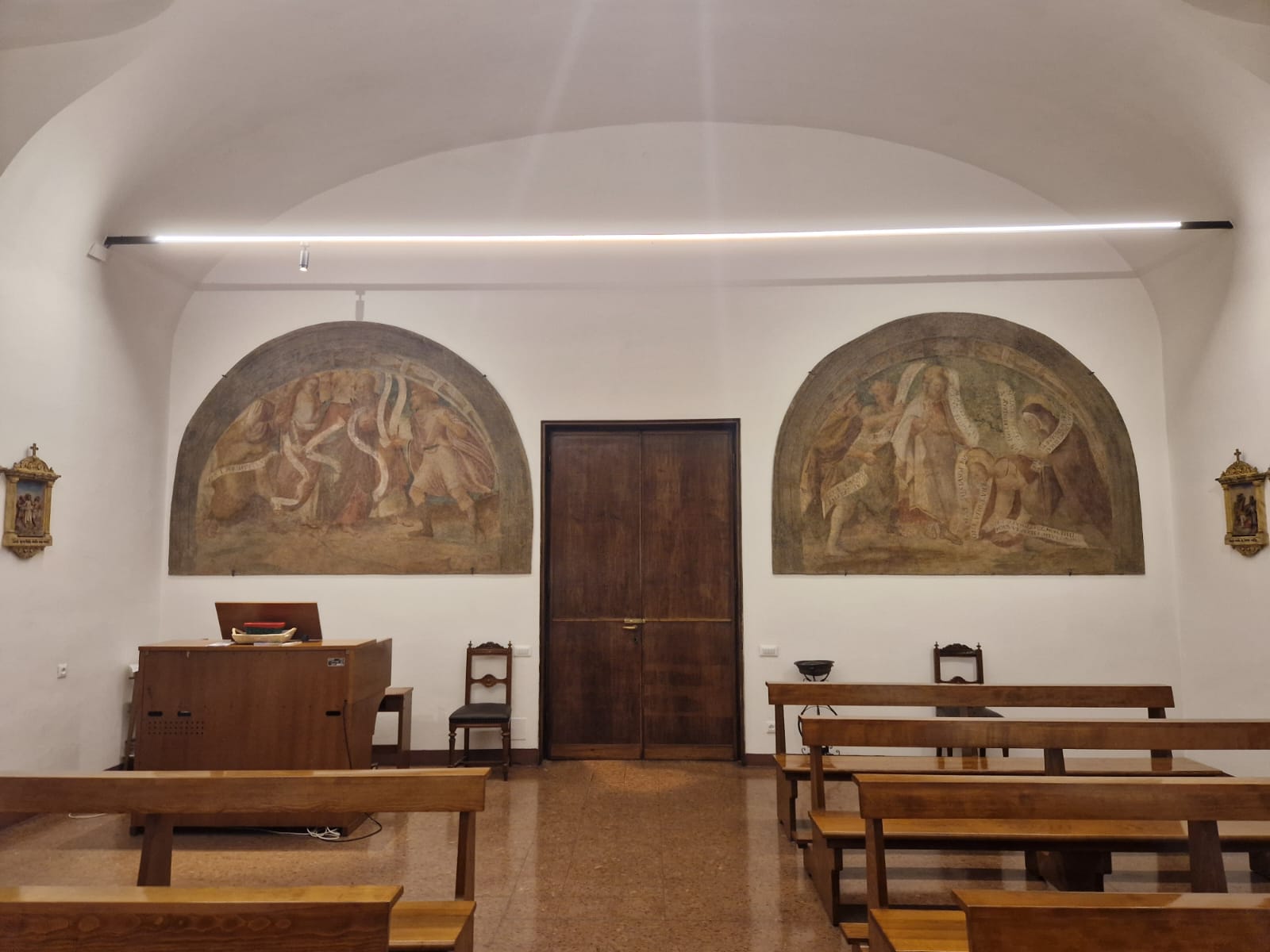
La decorazione e gli arredi originari sono perduti: sulle pareti sono presenti gli affreschi staccati, per motivi conservativi, dalla porzione orientale del chiostro. Anche attraverso i nastri con iscrizioni è possibile riconoscere l’episodio – narrato in più scene – della guarigione dello storpio da parte dei santi Pietro e Giovanni, nonché diverse scene da riferire al miracolo della Resurrezione di Lazzaro.
Attualmente l’ambiente è adibito a cappella per la comunità del Seminario.

The chapter hall
The name of the architect – Giovanni de’ Pessina – is well-known for having designed the chapter hall in the last quarter of the 15th century, located in the western wing of the cloister. The portal leading into the room, adorned with fine terracotta decorations, attests to the high skill of the craftsmen who worked for the monastery, highlighting the importance placed on the hall.
Although no specific information has been found regarding Santa Maria Teodote, it is reasonable to assume that, as in other Benedictine monasteries, daily prayer and admonition meetings took place here, along with discussions on administrative and practical matters, and the reading of a chapter from the rule: hence the name of the hall.
The original decoration and furnishings are lost: on the walls, there are detached frescoes, removed from the eastern portion of the cloister for conservation reasons. Through the ribbons with inscriptions, one can recognize the episode – depicted in several scenes – of the healing of the crippled man by Saints Peter and John, as well as several scenes related to the miracle of the Resurrection of Lazarus.
Currently, the space is used as a chapel for the Seminary community.
Ascolta l’audioguida


 seminariopavia.com