
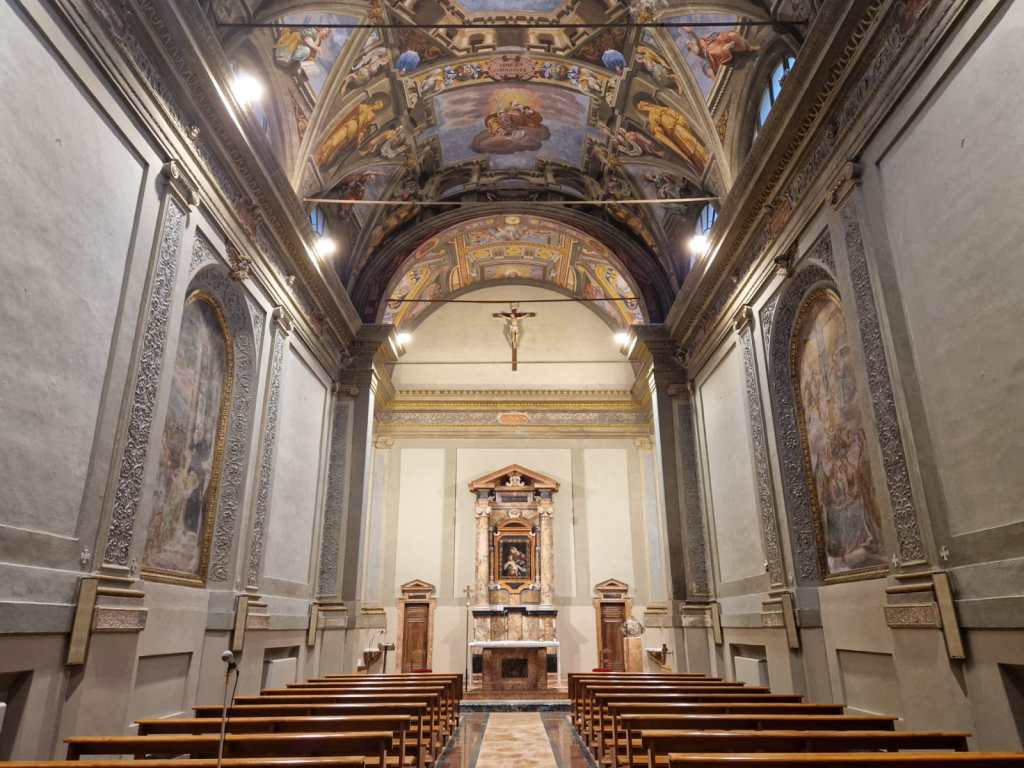
L’edificio ecclesiastico realizzato negli ultimi anni del XVI e nei primi del XVII secolo, già dedicato alla Vergine e ora a Sant’Andrea, fu progettata come “chiesa doppia”: suddivisa cioè in un “coro delle monache” ed una porzione accessibile ai fedeli non appartenenti alla comunità delle religiose. La struttura fu in parte demolita durante i lavori effettuati negli ultimi decenni dell’Ottocento per adattare le antiche strutture a Seminario Diocesano, attivo in questa sede a partire dal 1868.
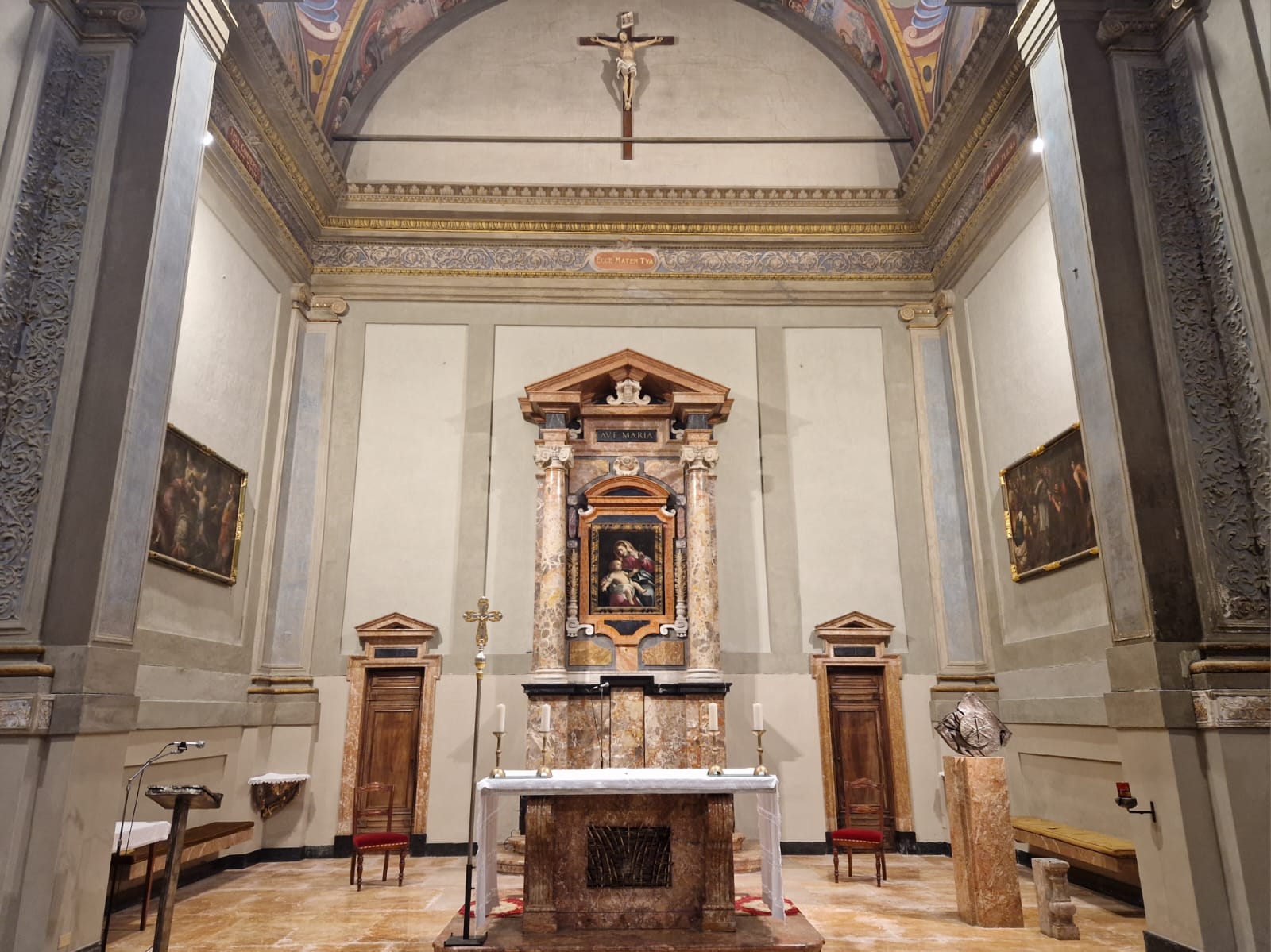
Alle modifiche ottocentesche va ricondotta in particolare la riduzione del coro: la porzione rimanente corrisponde grossomodo al presbiterio della attuale chiesa. La contrattura degli spazi si rende evidente all’osservazione degli affreschi mutili sulla copertura del presbiterio, zona in cui si leggono iscrizioni di tema mariano. L’originaria dedicazione alla Vergine si evince anche in relazione ai resti dell’altare maggiore che decorano la parete orientale. L’area presbiteriale è stata riorganizzata negli anni ‘70 del Novecento: oltre al riutilizzo e valorizzazione di elementi presenti sono stati collocati un tabernacolo e un leggio realizzati dall’artista e francescano P. Costantino Ruggeri.
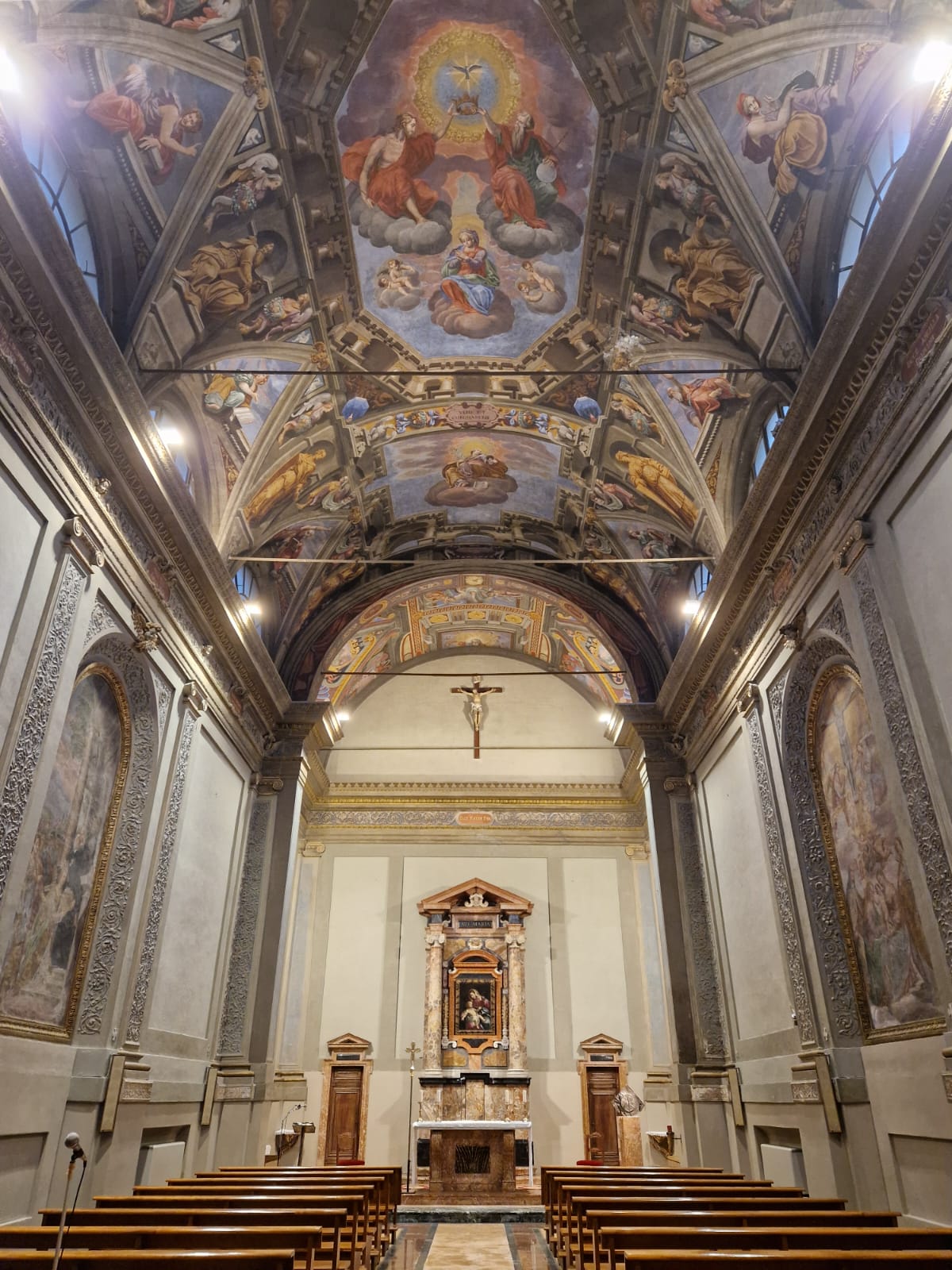
La “chiesa per gli esterni” ha mantenuto i volumi originari e l’impianto a navata unica. Conserva al suo interno pregevoli affreschi, oltre a decorazioni in stucco presumibilmente risalenti agli ultimi anni del Cinquecento. La parete meridionale presenta un affresco dalla insolita iconografia, con probabilità studiata per un monastero femminile: Il Bambino tra Sant’Anna e la Vergine (Sant’Anna Metterza) oltre a due sante; al di sopra di questa scena, il Crocifisso adorato da angeli. L’affresco corrispondente sulla parete settentrionale raffigura una nobile, o una regina, che offre un modello di chiesa a San Benedetto e Santa Scolastica (si potrebbe pensare alla regina Adelaide, che rifondò il monastero di San Salvatore fuori dalle mura di Pavia: la comunità di Santa Maria Teodote era affiliata alla congregazione di Santa Giustina, di cui il monastero maschile di San Salvatore faceva parte). La volta unghiata di copertura, decorata riccamente ma con caratteri differenti rispetto a quelli della volta del coro monastico, mostra, oltre a raffigurazione di sibille e profeti, tre scene a sfondato: vi si riconoscono rispettivamente una santa (a ovest) e una santa martire in gloria (a est); al centro una Incoronazione della Vergine.
Nei pressi nell’ingresso alla chiesa, sulla parete est, è collocata una scultura lignea, con ampie dorature, rappresentante la Vergine con il Bambino: l’opera risale presumibilmente al XVI secolo.


The monastic church
The ecclesiastical building, constructed in the late 16th and early 17th centuries, originally dedicated to the Virgin and now to Saint Andrew, was designed as a “double church”: divided into a “choir for the nuns” and a portion accessible to the faithful who did not belong to the religious community. The structure was partly demolished during work carried out in the last decades of the 19th century to adapt the ancient buildings for use as a Diocesan Seminary, which has been active here since 1868.
The 19th-century modifications are particularly responsible for the reduction of the choir: the remaining portion roughly corresponds to the current church’s presbytery. The contraction of space is evident when observing the mutilated frescoes on the presbytery’s ceiling, where Marian-themed inscriptions can be seen. The original dedication to the Virgin is also evident in relation to the remains of the main altar that decorate the eastern wall. The presbytery area was reorganized in the 1970s: in addition to the reuse and enhancement of existing elements, a tabernacle and a lectern created by the artist and Franciscan Father Costantino Ruggeri were placed here.
The “church for externals” has maintained its original volumes and the single nave layout. Inside, it preserves valuable frescoes, along with stucco decorations likely dating from the late 16th century. The southern wall features a fresco with unusual iconography, probably designed for a female monastery: The Child between Saint Anne and the Virgin (Saint Anna Metterza), along with two saints; above this scene, the Crucifix is adored by angels. The corresponding fresco on the northern wall depicts a noblewoman, or queen, offering a model of a church to Saint Benedict and Saint Scholastica (this could refer to Queen Adelaide, who refounded the monastery of Saint Salvatore outside the walls of Pavia: the community of Saint Maria Teodote was affiliated with the congregation of Saint Giustina, of which the male monastery of Saint Salvatore was a part). The vaulted ceiling, richly decorated but with a style different from that of the monastic choir’s vault, shows, in addition to representations of sibyls and prophets, three scenes in perspective: respectively, a saint (to the west), a glorious saint martyr (to the east); and in the center, the Coronation of the Virgin.
Near the entrance to the church, on the eastern wall, there is a wooden sculpture with extensive gilding, representing the Virgin with the Child: this work likely dates back to the 16th century.
Ascolta l’audioguida

 seminariopavia.com