

L’elegante refettorio delle monache che si apre nel lato meridionale del chiostro fu con probabilità edificato nel settimo decennio del XV secolo: in quegli anni fervevano nel monastero attività edilizie e decorative. L’ampio locale, attualmente adibito ad aula magna del seminario, presenta una copertura con volta a padiglione con vele e lunette. Le volte a vela poggiano su peducci (capitelli pensili) per cui fu utilizzato lo stampo realizzato per i peducci del chiostro di San Lanfranco.
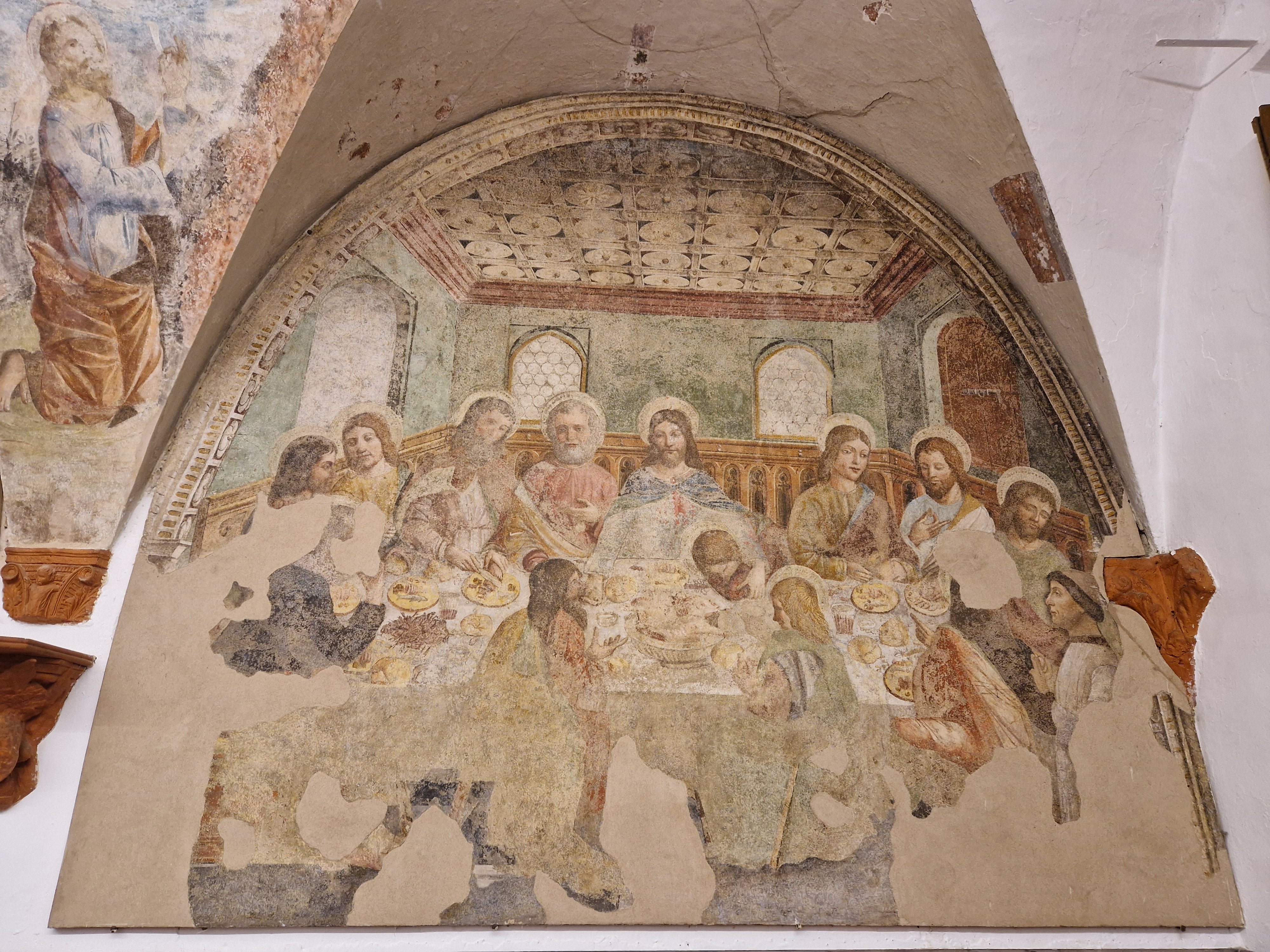
Sulla parete di chiusura a est del refettorio sono visibili due affreschi raffiguranti una Crocifissione con i Santi Benedetto e Scolastica e un’Ultima cena. Per motivi conservativi i due dipinti sono stati staccati e ricollocati nella sede originaria. L’affresco della vela centrale nella medesima zona orientale della sala rappresenta una Assunzione/Incoronazione della Vergine: Maria è raffigurata mentre viene “accompagnata” nei Cieli, dove è attesa da Cristo (riconoscibile dal nimbo crociato e dal colore delle vesti), il quale reca in mano una corona. La Vergine porge la cintola a Tommaso: è stato qui ripreso un episodio narrato da un vangelo apocrifo.
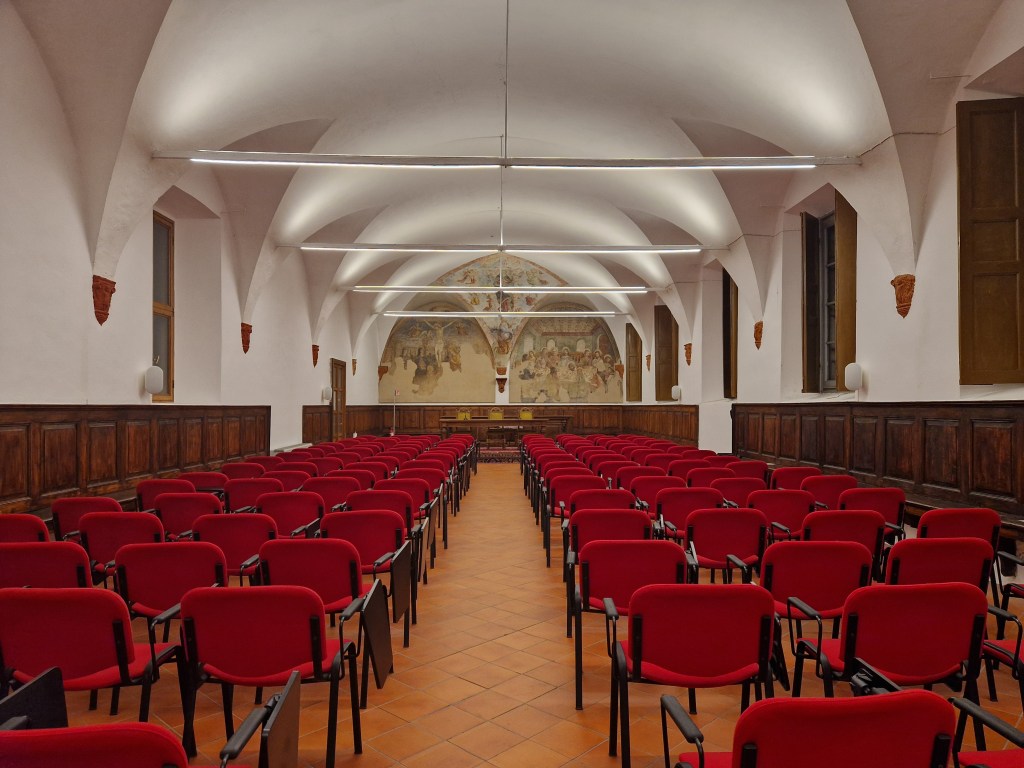
The refectory
The elegant refectory of the nuns, located on the southern side of the cloister, was most likely built in the 1470s, when construction and decorative activities were flourishing in the monastery. The spacious room, now used as the Aula Magna of the Seminary, features a vaulted ceiling with a pavilion vault, adorned with sails and lunettes. The sails rest on pendentives (hanging capitals), a mold created for the pendentives of the cloister of San Lanfranco made from.
On the eastern wall of the refectory, two frescoes are visible: one depicting the Crucifixion with Saints Benedict and Scholastica, and the other a Last Supper. For conservation reasons, the two frescoes were detached and later repositioned in their original location. The fresco on the central vault in the same eastern section of the room represents the Assumption/Coronation of the Virgin: Mary is shown as she is “taken up” to Heaven, where she is awaited by Christ (identified by the cross halo and the color of his garments), who holds a crown in his hand. The Virgin hands her belt to Thomas, an episode taken from an apocryphal gospel.

Ascolta l’audioguida


 seminariopavia.com