
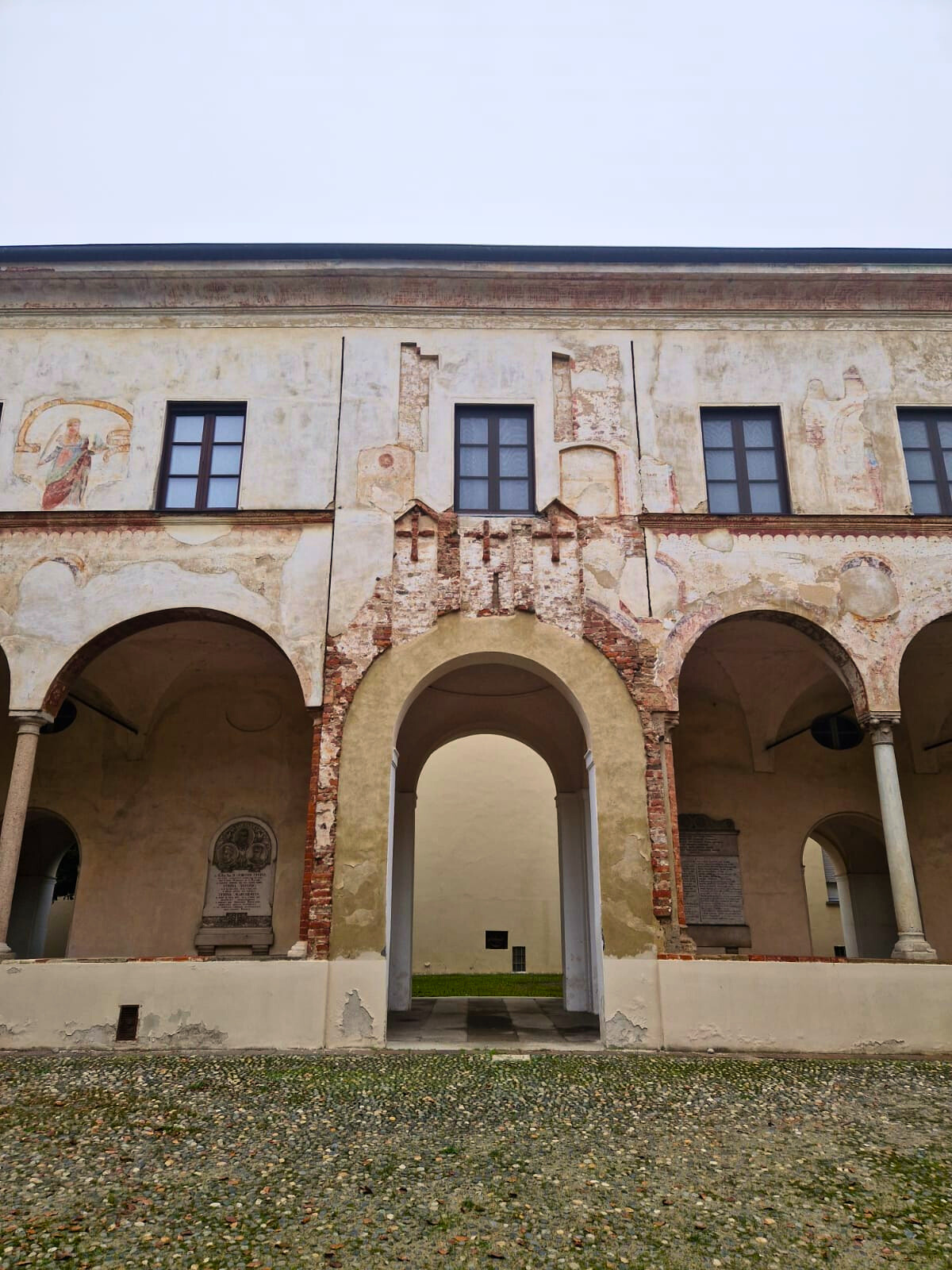
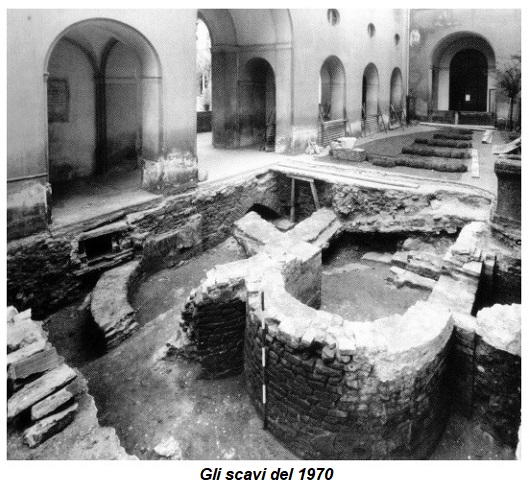
Nel lato settentrionale del chiostro – edificato nella seconda metà del XV secolo – venne inglobata una poderosa torre altomedievale: ancora oggi ne sono riconoscibili la consistenza muraria e la decorazione con tre croci a rilievo incorniciate da archi ciechi a doppio spiovente. La torre, presumibilmente usata anche come campanile, era connessa alla chiesa longobarda di San Michele, edificio risalente all’VIII secolo e realizzato a navata unica e tre absidi. Le fondamenta e porzioni dell’edifico ad uso liturgico sono state studiate e documentate negli anni ‘70 del Novecento.
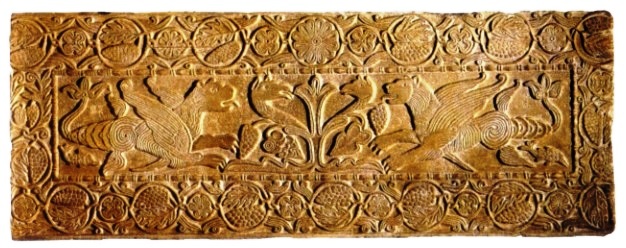
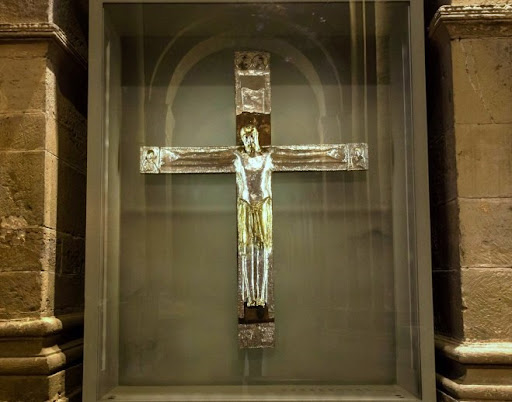
La chiesa conservava al suo interno manufatti assai preziosi come lastre o plutei (attualmente conservati presso i Musei Civici) decorati da finissimi rilievi e con probabilità anche il crocifisso in lamina argentata realizzato nel X secolo dietro commissione di una badessa. L’opera è stata trasportata a fine Settecento nella chiesa di San Michele Maggiore di Pavia.

The remains from the Lombard era
On the northern side of the cloister – built in the second half of the 15th century – a powerful early medieval tower was incorporated into the structure: today, its masonry and decoration with three raised crosses framed by blind arches with double slopes are still recognizable. The tower, presumably also used as a bell tower, was connected to the Lombard church of St. Michael, a building dating back to the 8th century, designed with a single nave and three apses. The foundations and portions of this liturgical building were studied and documented in the 1970s.
The church housed highly valuable artifacts, such as slabs or plutei (currently housed at the Civic Museums), decorated with exquisite reliefs, and likely also the crucifix made of silvered sheet metal, created in the 10th century by commission from an abbess. This work was transported in the late 18th century to the church of San Michele Maggiore in Pavia.

Ascolta l’audioguida


 seminariopavia.com