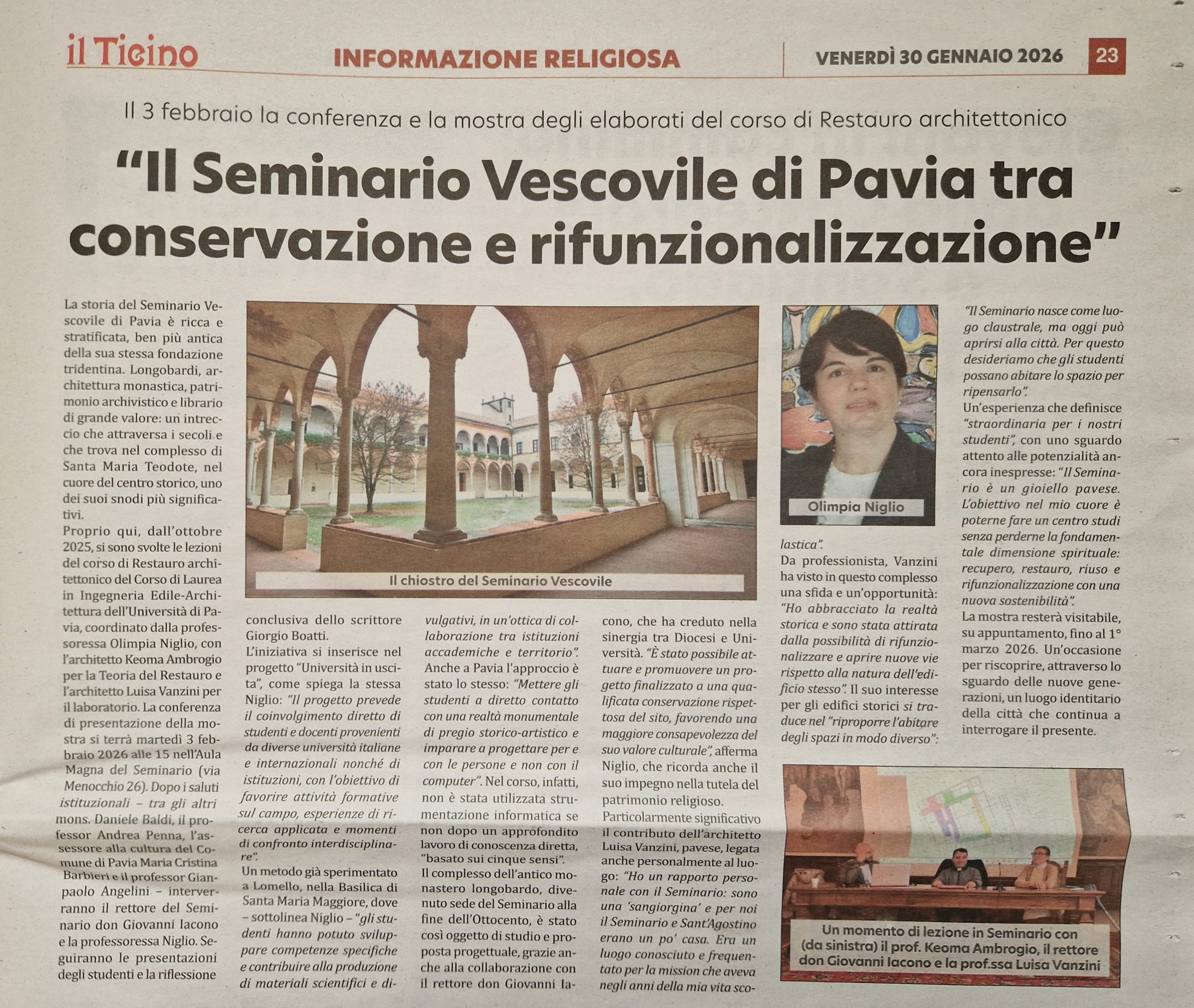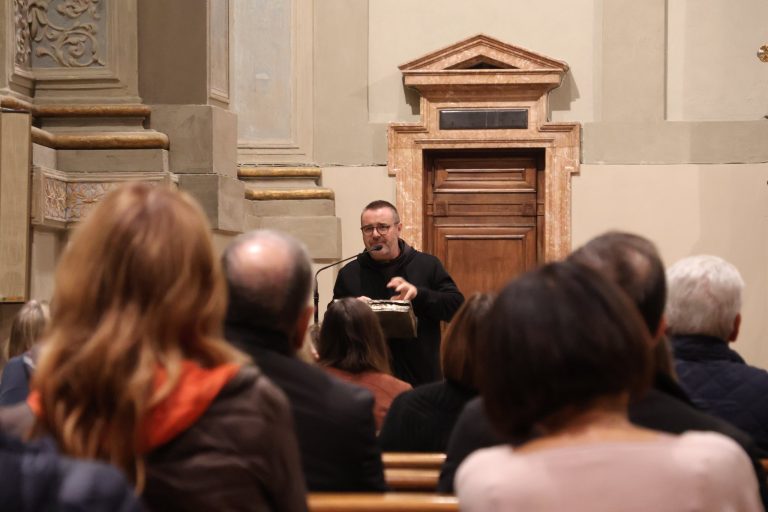
On Tuesday, February 3, 2026, in the splendid setting of the Aula Magna of the Episcopal Seminary, a conference was held to present the exhibition of research papers produced by fifth-year students of the Architectural Restoration programme at the University of Pavia. The papers had the theme "The Episcopal Seminary of Pavia between Conservation and Redevelopment," and the exhibition will be on display in the seminary rooms until March 1, 2026.
“"This project," explains Olimpia Niglio, Professor of Architectural Restoration at the University of Pavia, "is the result of an agreement between the Episcopal Seminary and the University of Pavia, specifically with the Department of Civil Engineering and Architecture. It will involve fifth-year students of the Architectural Restoration programme for two more years in restoring, enhancing, and rethinking the seminary's spaces, always taking into account their primary intended use. Having been able to work directly on the site under study, the students gained first-hand experience of the architecture, its signs of aging, its potential for reuse, and its preservation requirements.".
Alongside her, guiding the students in this work are architect Luisa Vanzini and Keoma Ambrogio, architect and official for the MiC. "The Seminary is a place of extraordinary richness: three churches—the Chapel of the Saviour, the remains of San Michele, and the main church—a library, spaces dedicated to research, and a large internal garden. A blend of spirituality, culture, and architecture that speaks to centuries of community life. Here, restoration is not just conservation," emphasizes architect Luisa Vanzini, "but also reuse and repurposing: the attempt to bring the memory of the place into dialogue with the contemporary need for redevelopment of the spaces."“
The workshop was not confined to the academic sphere; the students' papers have served as and will continue to serve as the basis for reflection on concrete restoration projects. The collaboration between the university programme and the Episcopal Seminary is part of a broader framework of initiatives aimed at enhancing the diocesan heritage from a community perspective.
Indeed, this is precisely the direction taken by the recent recognition from the Community Foundation of the Province of Pavia, which has co-financed the project "The Seminary for the City: a new space for meeting, dialogue, and culture," proposed by the Episcopal Seminary with the support of the Pavia branch of the FAI, the Copernico Scientific High School, and the University of Pavia, through its Engineering Department.
The project—strongly desired and promoted by Rector Don Giovanni Iacono—is one of seven projects selected by the "Community Initiatives" call promoted by Fondazione Cariplo, with the clear objective of supporting initiatives that have a social and cultural impact on the local area, capable of connecting institutions, universities, and citizens.
The planned work for the Seminary involves fire safety upgrades and the renovation of the Aula Magna and the adjacent "San Benedetto" hall of the monumental complex of Santa Maria Teodote, in the heart of the city. These spaces will become meeting places, places for learning, and cultural exchange, open to the entire city community, especially young people.
This co-financing project represents the natural continuation of the educational journey undertaken by the students: what began as a study and proposal now becomes a concrete opportunity to rethink historic spaces of undoubted value. Thanks to worthy organisations such as the Fondazione di Comunità and Fondazione Cariplo, these spaces can be brought to fruition.
The bond between the university and the diocese, in this context, takes on a special significance. The educational experience not only trains young engineers and architects, but also provides the community with a new vision of its heritage, which is not merely a thing of the past—in the classic museum sense—but can once again be experienced and shared, with a true community spirit.
Inhabiting a place is much more significant than imagining it, and "inhabiting," in the language of restoration, means becoming custodians, understanding the signs of time, but also planning future possibilities.
The Episcopal Seminary thus confirms its position as a living space in the city, a bridge between faith and culture, memory and innovation, aimed at forging authentic human bonds.
A virtuous example of how collaboration between institutions, the Church, universities, civic groups, and the city community can generate shared value: caring for the Seminary becomes, together, caring for a community.
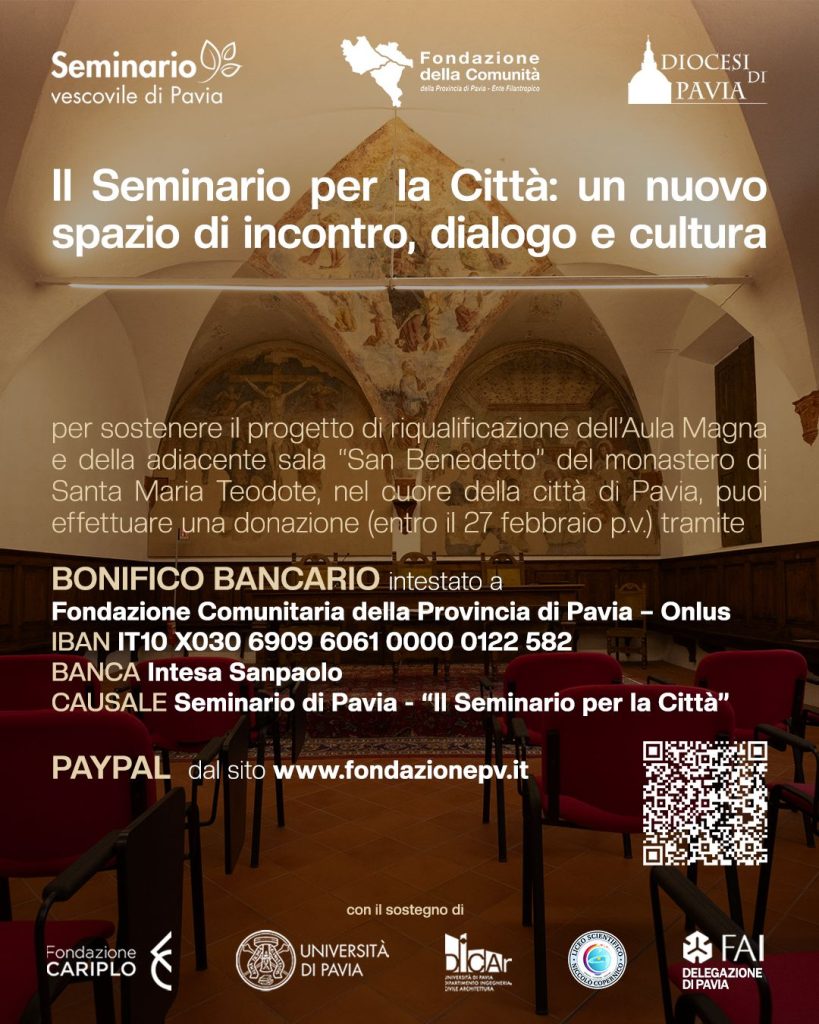
You can support the project directly from the Pavia Province Community Foundation website: https://www.fondazionepv.it/lista-progetti/il-seminario-per-la-citta-un-nuovo-spazio-di-incontro-dialogo-e-cultura/
The exhibition of the study papers will be open to visitors until March 1st by writing to info@seminariopv.it.
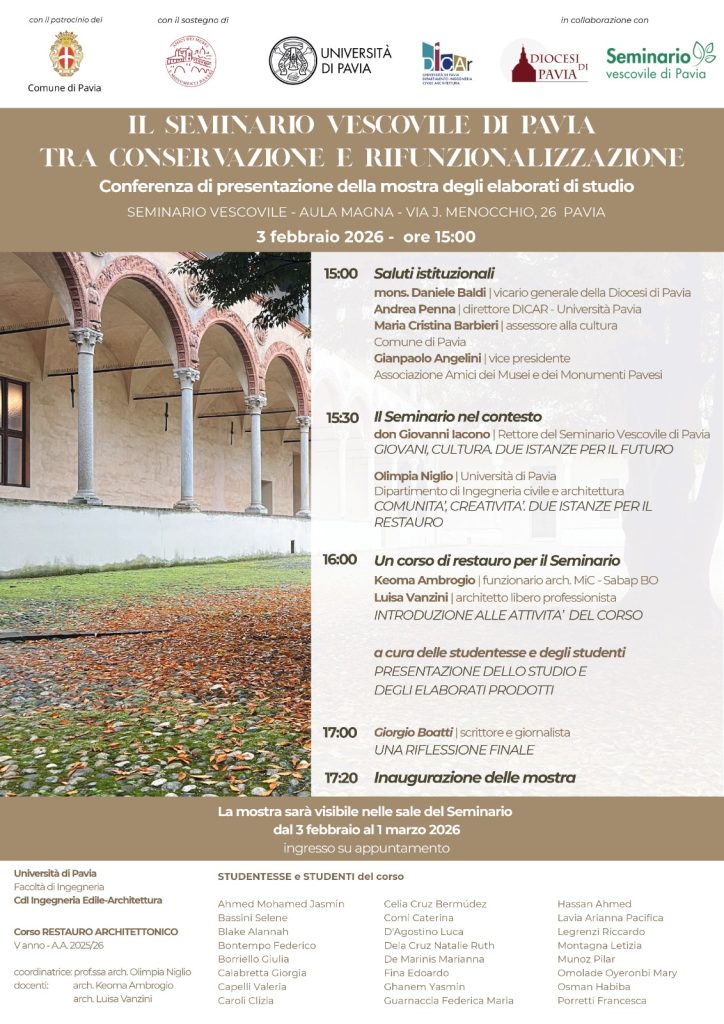
Photo gallery